


For a number of years, regulators on both sides of the Atlantic have sought to tackle difficult questions about the ways in which digital assets should be regulated. At this time, the theories and legislation that underpin future regulatory regimes are more developed on the European side of the pond. UK and EU policymakers (the EU’s in particular) have made bigger strides onclarifying questions related to the definition of assets, licensing, investor protection and managing systemic risk.
The EU’s Markets in Crypto Assets Regulation (MiCAR)1 aims to secure the market integrity and financial stability of EU markets in the full range of crypto assets – only digital art and collectibles and other types of ‘unique and not fungible crypto assets’ (NFTs), as well as crypto assets which are already regulated financial instruments under the EU’s capital markets legislation, are excluded. Yet, it has an emphasis on the fast-growing payments technology of ‘stablecoins’ that are pegged to one official currency (e-money stablecoins) or to more than one official currency or other assets (asset-referenced stablecoins).
The approach of UK legislators is more piecemeal: they will initially focus on stablecoins that are used for payments (‘digital settlement assets’) before setting their sights on wider crypto assets beyond digital settlement assets, including those primarily used as a means of investment such as Bitcoin.
The Bank of England and European Central Bank (ECB) are also involved: each is exploring the feasibility of building its own systems which could offer a tokenized form of the national currency – digital sterling (‘Britcoin’) or digital euro - and the rails on which it is transacted.
On the other hand, the restructuring regimes that will be developed in the EU and UK to apply to crypto brokerage debtors are likely to take account of the bankruptcies playing out in the U.S.
Indeed, as a number of other jurisdictions also seek to use their regulatory frameworks to attract business, the ‘crypto winter’ has raised questions about appropriate regulatory,commercial law and insolvency regimes to back up a market for crypto and distributed ledger technology (DLT) markets. Companies that set up in certain jurisdictions may end up becoming systemic relative to the local and international markets. What would happen if those companies went into insolvency? How should regulators address questions around exposure and contagion? In this article, we explore some of the regulatory responses to these questions in the UK and EU, and how they may shape regulatory approaches in emerging markets (EM).







What proposals are being considered in EMs? Perhaps the most headline-grabbing jurisdiction is El Salvador. In 2021, the country passed legislation to make Bitcoin legal tender. In response, the IMF commented that the move posed “large risks for financial and market integrity, financial stability, and consumer protection”2.
El Salvador had also announced the issuance of a bond indexed to Bitcoin, a plan that was later postponed, though Finance Minister Alejandro Zelaya was quoted in March 2022 as saying that plans were still expected to go ahead3.
Other markets are also discussing digital currency issuances. China announced plans to launch a digital yuan4, the Bahamas5 and Eastern Caribbean6 also announced central bank-issued digital currencies, as well as the Marshall Islands7.
Yet other countries are backing the use of private stablecoins. Markets where the use of stablecoins, in place of commercial bank money, is being explored include Nigeria, Panama, Paraguay and Cuba.
In addition, a global race to attract major crypto asset service providers to set up locally has also started. For example, Bermuda’s Digital Asset Business Act 2018 put in place the regulatory framework under which companies offering exchange, payment, or wallet services, can operate in the country8. Since then, the British Overseas Territory has marketed itself as a digital asset hub and recently approved the license for its first digital asset bank9. Other jurisdictions have similarly put in place – or are in the process of establishing - regulatory regimes and licensing rules. These include Jersey, Guernsey, Dubai and the Abu Dhabi Global Market.

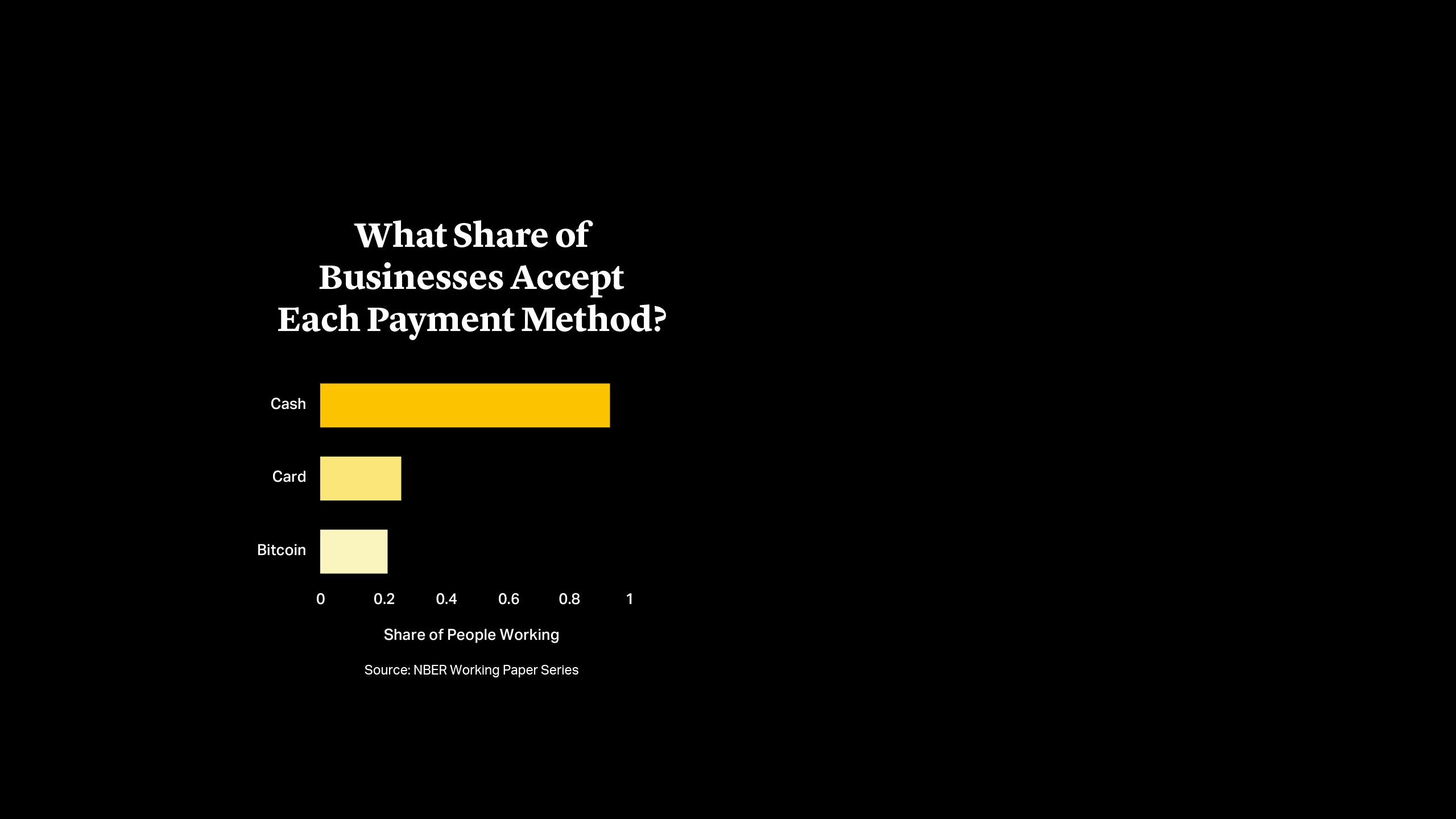
What proposals are being considered in EMs? Perhaps the most headline-grabbing jurisdiction is El Salvador. In 2021, the country passed legislation to make Bitcoin legal tender. In response, the IMF commented that the move posed “large risks for financial and market integrity, financial stability, and consumer protection”2.
El Salvador had also announced the issuance of a bond indexed to Bitcoin, a plan that was later postponed, though Finance Minister Alejandro Zelaya was quoted in March 2022 as saying that plans were still expected to go ahead3.
Other markets are also discussing digital currency issuances. China announced plans to launch a digital yuan4, the Bahamas5 and Eastern Caribbean6 also announced central bank-issued digital currencies, as well as the Marshall Islands7.
Yet other countries are backing the use of private stablecoins. Markets where the use of stablecoins, in place of commercial bank money, is being explored include Nigeria, Panama, Paraguay and Cuba.
In addition, a global race to attract major crypto asset service providers to set up locally has also started. For example, Bermuda’s Digital Asset Business Act 2018 put in place the regulatory framework under which companies offering exchange, payment, or wallet services, can operate in the country8. Since then, the British Overseas Territory has marketed itself as a digital asset hub and recently approved the license for its first digital asset bank9. Other jurisdictions have similarly put in place – or are in the process of establishing - regulatory regimes and licensing rules. These include Jersey, Guernsey, Dubai and the Abu Dhabi Global Market.



The competition is well and truly on, for established financial centers and EMs alike, to develop world-leading frameworks for the regulation of DLT and crypto assets that can protect andenhance their jurisdiction’s reputation as a safe and transparent place to do business in financial services, protect consumers and financial stability, and support growth and innovation.
The quicker a jurisdiction can adopt regimes, the quicker they can attract businesses. How a regulatory framework should be set up is a relevant question for emerging markets.
EM regulators will do well to look to the EU and the UK (and eventually the U.S.) for guidance, for a number of reasons. These regimes are the ones that are most likely to drive international convergence – not least because the jurisdictions are aiming to put in place robust and comprehensive policy responses to the crypto winter to address and prevent systemic risk. We may find that MiCAR, for example, becomes a standard for crypto asset regulation around the world.
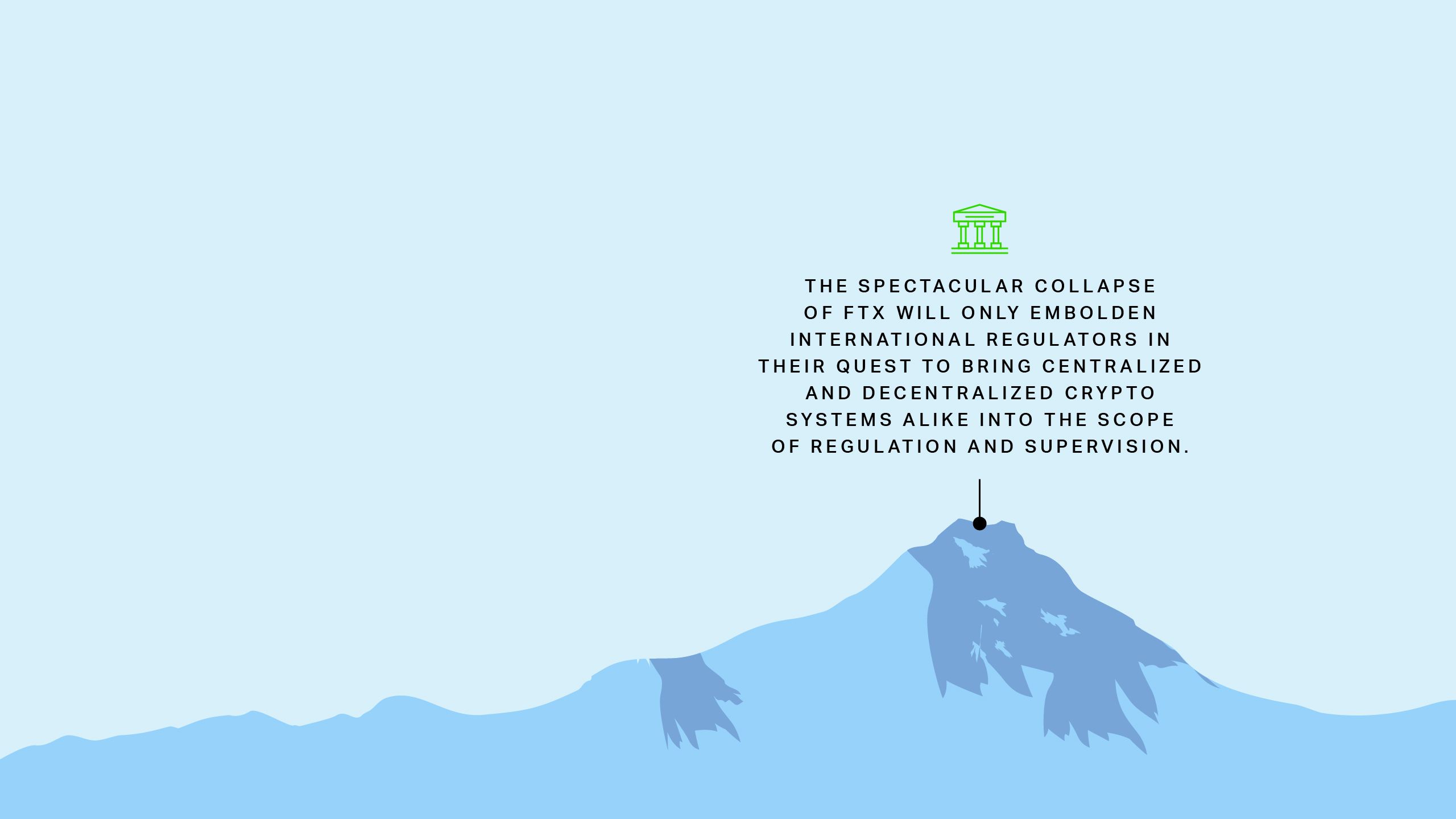
MiCAR was designed to be compliant with recently proposed Financial Stability Board (FSB) recommendations for the regulation of crypto asset activities10. The recommendations emphasize the popular regulatory-design principle of ‘same activity, same risk, same regulation’. They propose that stablecoins intended to serve as settlement assets for payments should be regulated like bank deposits, while crypto-capital markets should be treated like traditional capital markets. Meanwhile, under proposals made by the Basel Committee on Banking Supervision, the global standard setter for banking regulations, banks exposed to “unbacked crypto assets and stablecoins with ineffective stabilization mechanisms” will have to adhere to a“conservative prudential treatment” – a euphemism for punitive capital charges11. The spectacular collapse of FTX will only embolden international regulators in their quest to bring centralized and decentralized crypto systems alike into the scope of regulation and supervision.


It is not unlikely that an EM builds a framework for offering stablecoins, considering the low levels of banked clients, high fees for correspondent banks and high costs for cross-border transfers. However, smaller markets could be at a disadvantage if they take very different approaches to what the EU or UK regulatory regimes end up looking like or depart from global standards.
Apart from the questions of what and how to regulate, regulators have to grapple with the question of where. Given the propensity for crypto asset business to flow across international borders, in what circumstances should a particular regulator have jurisdiction in digital electronic trading?
In MiCAR, the EU has opted to give its regulators extra-territorial jurisdiction. This means, for example, that if an EM adopted a framework for issuing stablecoins and a private issuer wantedto offer those stablecoins to EU counterparties, MiCAR could apply. Without any provision in the rulebook for deference to non-EU regulations based on equivalence or otherwise, non-EU issuers issuing into the EU could have to comply with the applicable MiCAR regulations as well as those in their home jurisdiction, and may even need to set up EU legal entities which would have to be authorized in a Member State. Therefore, to reduce friction the non-EU jurisdiction’s legislation would ideally be aligned to MiCAR.
The UK may be more open to overseas firms but this is not a given. Cross-border business has traditionally not been as tightly regulated in the UK as in the EU, but the issues that have arisen from these new digital assets, compounded by trade fragmentation as a result of Brexit, are putting pressure on that approach. In its January 2021 consultation on the UK regulatory approach to crypto assets, stablecoins, and DLT in financial markets, the UK government asked whether stablecoin operators and service providers actively marketing to UK consumers should be required to have a UK establishment and be authorized in the UK. Given the government’s historical aversion to “location policies” – it famously sued the ECB, and won, over location requirements for clearing houses12 – it is clear that the increased threat stablecoins could pose to financial stability, both in the UK and internationally, is a major concern. Part of its response under the Financial Services and Markets Bill (‘FSMA 2.0’) will see the application of legislation that applies to systems that operate “wholly or partly in relation to persons or places outside the United Kingdom” to systemic digital firms. If the regulation were to go further along the path of extra-territoriality, this could add to the difficulties for EMs in sheltering home-growncrypto asset firms that can passport globally. Recent press reports of the UK government’s planned consultation on further powers to be given to the regulators under FSMA 2.0 suggests that this risk could materialize, with the government said to be considering limits on foreign companies selling into the UK13.




It is not enough to set up the regulatory framework which mitigates against the risk of something going wrong without considering the failure of a systemically important crypto asset firm. If it wasn’t a point of focus before, the implosion of the crypto firms in the ongoing crypto winter has quickly become a red flag for regulators in the UK and the EU.
The lessons from the crypto winter must be heeded by EM legislators too. Policies need to be put in place to provide a range of tools to prevent failures but must also include the fire-fighting mechanisms to prevent contagion once a failure does occur. In the same way that regulators identified the need to have a specific insolvency regime for financial institutions to prevent a market failure situation like that which occurred following the collapse of Lehman Brothers in 2008, the assets involved in the stablecoin market are unique enough that they pose systemic risk. This suggests the need for a special insolvency and resolution regime.





Here the UK’s policy making is the more comprehensive. This is unsurprising given English law’s position, along with New York law, as a governing law of choice for international commerce.
The UK government has focused on digital settlement assets that can become systemic. The Bank of England has been working with the FSB and the International Organization of Securities Commissions (IOSCO) to apply the Principles for Financial Market Infrastructures (PFMI) – which apply to entities like clearinghouses – to prevent systemic issues in the stablecoin space.
In a July speech, Jon Cunliffe, Deputy Governor, Financial Stability at the Bank of England flagged the importance for regulators of tackling the potential systemic issues with stablecoinsafter the insolvency dust settles: “I doubt any of the stablecoins currently in operation in other jurisdictions would meet the necessary standards for operation at systemic level in the UK – whether in the crypto world, should that become systemic, or in conventional financial services.”14
Among other things, FSMA 2.0 updates the current legislation to include stablecoins and otherdigital settlement assets. It is expected to become law in 2023, with the Bank of England as lead regulator of systemic digital settlement assets. In addition to measures related to licensing, regulator jurisdiction, economic regulation and competition law, the UK framework will go astep further by applying the special insolvency regime that applies to systemically important inter-bank payment systems and securities settlement systems to systemic stablecoins. As a result, the Bank of England will be given powers to take the necessary measures to ensure the orderly wind-down of a failing systemic digital settlement asset firm. Following the implosion of FTX, provisions for dealing with the collapse of other types of crypto companies are expected to be added to the mix15.
Alongside these measures, questions about whether crypto assets are to be treated as property under general law, including the UK Insolvency Act 1986, are being looked at by legal expertsand law reformers. They can qualify as property (if they meet longstanding legal tests),according to the influential UK Jurisdiction Taskforce, a government-backed panel of experts convened to demonstrate that English law provides a state-of-the art foundation for the development of cryptos, DLT and smart contracts16. However, a 500-page magnus opus by the jurisdiction’s ‘Law Commission’ seeks to develop reforms that provide legal certainty on this issue and a number of related commercial law issues, including custodial and collateral arrangements17.
Here the UK’s policy making is the more comprehensive. This is unsurprising given English law’s position, along with New York law, as a governing law of choice for international commerce.
The UK government has focused on digital settlement assets that can become systemic. The Bank of England has been working with the FSB and the International Organization of Securities Commissions (IOSCO) to apply the Principles for Financial Market Infrastructures (PFMI) - which apply to entities like clearinghouses - to prevent systemic issues in the stablecoin space.
In a July speech, Jon Cunliffe, Deputy Governor, Financial Stability at the Bank of England flagged the importance for regulators of tackling the potential systemic issues with stablecoinsafter the insolvency dust settles: “I doubt any of the stablecoins currently in operation in other jurisdictions would meet the necessary standards for operation at systemic level in the UK – whether in the crypto world, should that become systemic, or in conventional financial services.”14
Among other things, FSMA 2.0 updates the current legislation to include stablecoins and otherdigital settlement assets. It is expected to become law in 2023, with the Bank of England as lead regulator of systemic digital settlement assets. In addition to measures related to licensing, regulator jurisdiction, economic regulation and competition law, the UK framework will go astep further by applying the special insolvency regime that applies to systemically important inter-bank payment systems and securities settlement systems to systemic stablecoins. As a result, the Bank of England will be given powers to take the necessary measures to ensure the orderly wind-down of a failing systemic digital settlement asset firm. Following the implosion of FTX, provisions for dealing with the collapse of other types of crypto companies are expected to be added to the mix15.
Alongside these measures, questions about whether crypto assets are to be treated as property under general law, including the UK Insolvency Act 1986, are being looked at by legal expertsand law reformers. They can qualify as property (if they meet longstanding legal tests),according to the influential UK Jurisdiction Taskforce, a government-backed panel of experts convened to demonstrate that English law provides a state-of-the art foundation for the development of cryptos, DLT and smart contracts16. However, a 500-page magnus opus by the jurisdiction’s ‘Law Commission’ seeks to develop reforms that provide legal certainty on this issue and a number of related commercial law issues, including custodial and collateral arrangements17.




The focus of MiCAR is to prevent losses for holders of stablecoins. The regulation will ensure that e-money stablecoin-holders have a claim on the issuer and a right to redeem their stablecoins at any moment against at par value with the reference currency. The funds used by holders to purchase the stablecoins will have to be ‘safeguarded’.
Issuers of asset-referenced stablecoins will have to maintain a reserve of assets to cover the issuer’s liabilities to holders. The reserve will be segregated from the issuer’s assets and used for the benefit of holders when the issuer is not able to perform, such as in insolvency.
Had the collapse of algorithmic stablecoins TerraUSD and LUNA occurred in a European context, MiCAR (once it had become applicable) would have required the issuers to hold greater amounts of reserve assets and to segregate those assets. That said, where reserve assets are backed by an algorithm which is poorly designed, the assets could lose their value, even if they are segregated, and holders may not be paid back at par. Accordingly, MiCAR includes a raft of measures to ensure that stabilization mechanisms work, the reserve of assets is prudently managed, and that issuers are transparent.
MiCAR also requires custodians and other service providers to segregate client crypto assets from their own assets, in order to ensure that they are safe under insolvency and not available to creditors. These are measures that may have mitigated the risk of FTX’s alleged misappropriation of customer assets.
If a crypto-custodian or stablecoin arrangement were to fail, however, this would have to be resolved in part by insolvency laws, which are not harmonized at EU level. If we see a shock in the EU where there are chains of related transactions, this topic could become complex, with different member states adopting different solutions.
With MiCAR finalized, we can expect to see EU policy focus shift to insolvency and resolution of stablecoins. MiCAR already provides for stablecoin issuers to draw up redemption plans to protect the rights of holders in insolvency. In a second stage, EU legislators may consider how such plans can be effectuated through the contractual arrangements among issuers, holders and service providers within a stablecoin system that are backed by cross-border recognition, and address the coordination of national and pan-EU authorities in a failure scenario.
The focus of MiCAR is to prevent losses for holders of stablecoins. The regulation will ensure that e-money stablecoin-holders have a claim on the issuer and a right to redeem their stablecoins at any moment against at par value with the reference currency. The funds used by holders to purchase the stablecoins will have to be ‘safeguarded’.
Issuers of asset-referenced stablecoins will have to maintain a reserve of assets to cover the issuer's liabilities to holders. The reserve will be segregated from the issuer’s assets and used for the benefit of holders when the issuer is not able to perform, such as in insolvency.
Had the collapse of algorithmic stablecoins TerraUSD and LUNA occurred in a European context, MiCAR (once it had become applicable) would have required the issuers to hold greater amounts of reserve assets and to segregate those assets. That said, where reserve assets are backed by an algorithm which is poorly designed, the assets could lose their value, even if they are segregated, and holders may not be paid back at par. Accordingly, MiCAR includes a raft of measures to ensure that stabilization mechanisms work, the reserve of assets is prudently managed, and that issuers are transparent.
MiCAR also requires custodians and other service providers to segregate client crypto assets from their own assets, in order to ensure that they are safe under insolvency and not available to creditors. These are measures that may have mitigated the risk of FTX’s alleged misappropriation of customer assets.
If a crypto-custodian or stablecoin arrangement were to fail, however, this would have to be resolved in part by insolvency laws, which are not harmonized at EU level. If we see a shock in the EU where there are chains of related transactions, this topic could become complex, with different member states adopting different solutions.
With MiCAR finalized, we can expect to see EU policy focus shift to insolvency and resolution of stablecoins. MiCAR already provides for stablecoin issuers to draw up redemption plans to protect the rights of holders in insolvency. In a second stage, EU legislators may consider how such plans can be effectuated through the contractual arrangements among issuers, holders and service providers within a stablecoin system that are backed by cross-border recognition, and address the coordination of national and pan-EU authorities in a failure scenario.




Brandon M. Hammer
Counsel
New York
T: +1 212 225 2635
bhammer@cgsh.com
V-Card

Ferdisha Snagg
Counsel
London
T: +44 20 7614 2251
fsnagg@cgsh.com
V-Card



 Built with Shorthand